
Replacing cockpit upholstery is usually straightforward. Adding stabilization after delivery can require structural work and changes to onboard systems. Both can improve life aboard, but their cost and complexity depend heavily on when the decision is made.
For a new yacht, put the hardest-to-change features at the front of the specification process. For a recent brokerage purchase, begin with the original build specification and what is already installed. In both cases, distinguish a cosmetic update from a change to the yacht’s underlying design.
Electronics benefit from early planning and selective upgrades
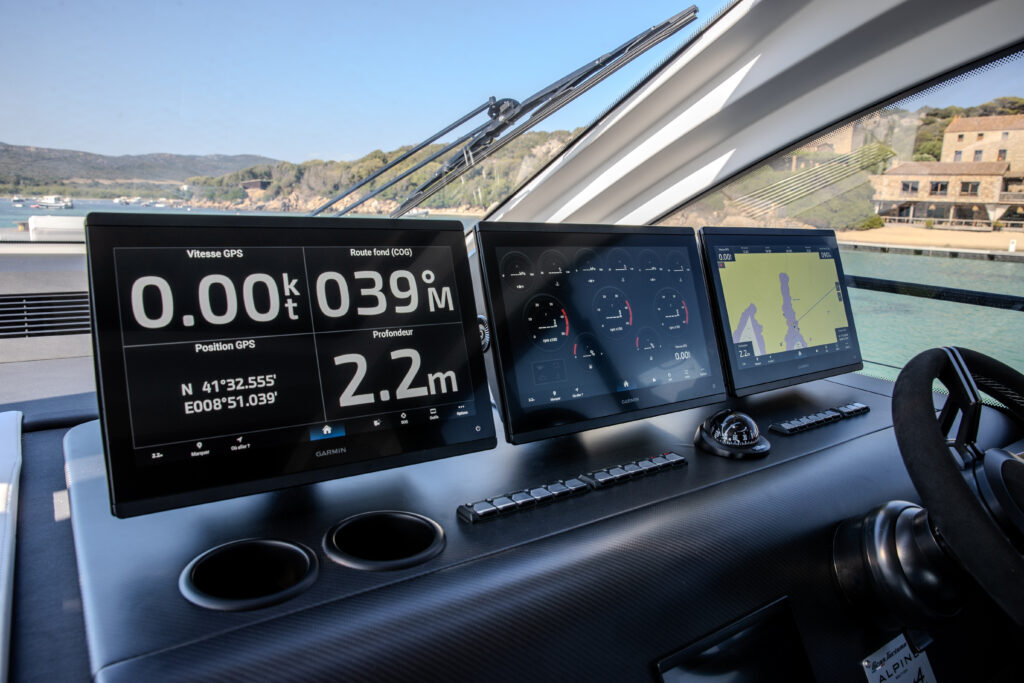
Factory planning matters most when electronics interact with propulsion controls or the yacht’s central monitoring system. An integrated helm can depend on proprietary interfaces and carefully planned wiring routes.
An additional display or a newer radar may be practical after delivery, provided an installer confirms compatibility and mounting space, along with adequate electrical capacity. Check the whole system: a new screen may require other components to deliver the features you want.
On a new order, ask about approved cable routes and preparation for likely additions. On a brokerage yacht, inspect existing helm cutouts and access behind the dash before selecting replacements. Allow time for commissioning and testing before relying on the updated system underway.
Stabilization deserves a place on the original specification
Where stabilization is offered for your chosen model, factory installation is often the better starting point. A gyro needs adequate space and a foundation engineered for its loads, along with suitable power and, for some systems, cooling. Fin stabilizers can require hull penetrations and substantial structural integration.
A retrofit can be appropriate, but feasibility comes before equipment selection. A model-specific assessment should address structural suitability and service access, as well as power demand at anchor. Ask a qualified installer whether generator operation will be necessary in the proposed configuration.
Choose around your cruising pattern. Performance at rest and underway varies by system; a long lunch at anchor and an offshore passage place different demands on stabilization.
Shade choices depend on what supports them
A hardtop or substantial roof extension is generally best resolved with the builder. Its weight and attachment points require careful consideration, while its position can affect sightlines or interfere with antennas and navigation lights.
Removable awnings and replacement canvas are more natural candidates for post-delivery customization. They can be tailored to how you use the cockpit, provided appropriate mounting points are available.
Confirm whether the shade is designed for use underway and how it stows. Check boarding routes and handhold access with it deployed. An attractive canopy becomes an inconvenience when a support blocks the route from the swim platform to the cockpit.
Order the fixed interior and personalize the soft finishes
Cabin layouts and fixed cabinetry belong early in the factory conversation, where alternatives are available. Moving a galley or altering built-in furniture later can disturb concealed services and require extensive finish work.
The same logic applies to veneers and other coordinated built-in finishes. Matching them after delivery can be difficult, especially once sunlight has altered the original material.
Upholstery and loose textiles offer more freedom after purchase. They can give a brokerage yacht a distinctly personal feel without changing its layout. Choose materials suited to their location, particularly where sunlight or damp conditions are factors, and keep ventilation openings and service panels accessible.
For expensive-to-change finishes, consider future buyers alongside personal taste. More individual choices are easier to refresh when they remain in replaceable fabrics rather than permanent joinery.
Protect warranty clarity and resale confidence
Before authorizing work, confirm equipment and workmanship coverage in writing, including who handles a claim. Dealer-installed equipment may carry different coverage from factory-installed options. For modifications, ask the yacht manufacturer about any effects on coverage for the systems being changed.
Agree on commissioning and acceptance checks before installation begins. Depending on the work, those checks may include functional testing underway or a demonstration of operation at anchor. Resolve responsibility for any follow-up adjustments before handover.
For resale, prioritize work future owners can understand and service. Retain invoices, equipment manuals, commissioning records and updated wiring diagrams. Documented, professionally integrated upgrades can reassure a buyer, although their cost may not be recovered at resale.
When we help you compare new and brokerage yachts at Chesapeake Yacht Center, these choices belong in the purchase conversation, alongside layout and intended use. Bring your cruising plans and upgrade priorities to a private appointment so we can help you focus the specification around how you want to spend time aboard.