
What Everyone Gets Wrong About Stabilization Systems – And How Gyros vs. Fins Really Affect Comfort Underway
Stabilization has become one of the most discussed features in modern yacht design, yet it’s also one of the most misunderstood. Many buyers know they want a “stable” yacht, but the nuances between gyroscopic stabilization and fin stabilizers – and how each affects comfort at rest and underway – are often unclear.
For owners cruising the Chesapeake Bay, the Intracoastal, or heading offshore, understanding these systems is essential to making a confident yacht purchase.
At Chesapeake Yacht Center, we regularly help clients compare stabilization options across brands like Prestige, Princess, Pardo, Cranchi, Dyna, Jeanneau, and Navan. Here’s what most people get wrong – and what actually matters for comfort on the water.
The Biggest Misconception: “A Stabilizer Is a Stabilizer”
The most common mistake is assuming all stabilization systems do the same thing, just with different hardware. In reality, gyros and fins address motion in very different ways, and each has strengths that shine in specific conditions and speed ranges.
Two key truths to keep in mind:
- There is no “one perfect system” for every yacht and cruising style.
-
The right choice depends on how (and where) you actually use your boat:
- Mostly at anchor or raft-ups?
- Longer coastal passages?
- Higher cruising speeds?
- Mixed-use family cruising with guests new to boating?
Once we understand your real-world usage, the conversation around stabilization becomes much clearer.
How Gyroscopic Stabilizers Work – And When They Shine
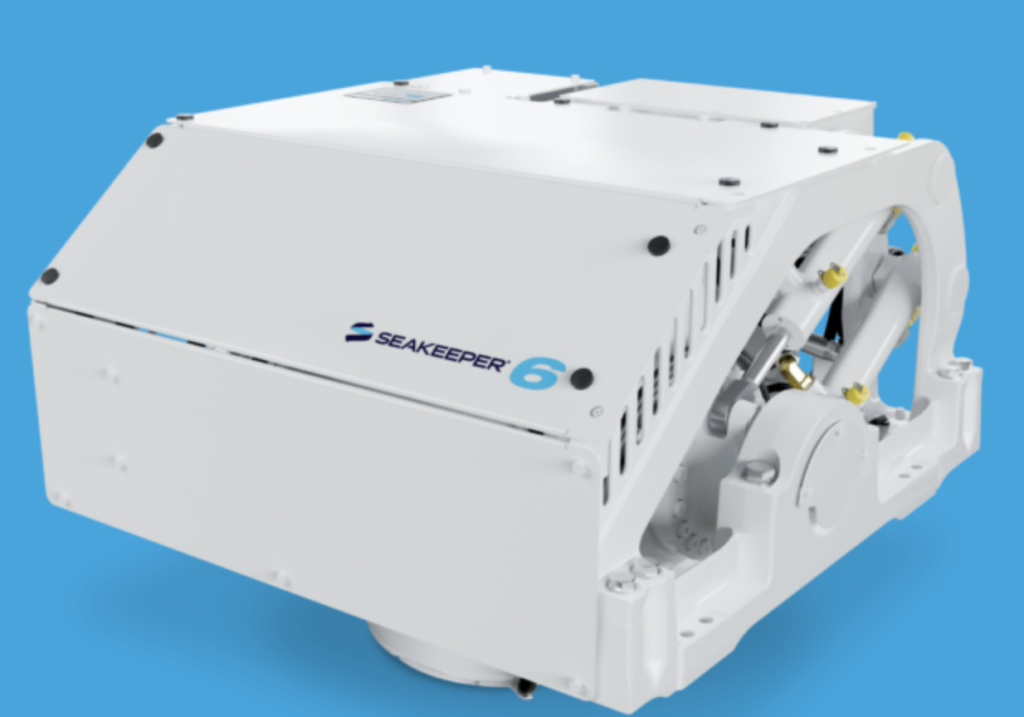
Gyroscopic systems, such as Seakeeper, use a spinning flywheel housed inside the boat. As the boat rolls, the gyroscope precesses (tilts) and generates torque that counteracts that rolling motion.
What Gyros Do Best
1. Exceptional stability at rest
At anchor or drifting, gyros are remarkably effective. On a beam swell or a busy weekend in a crowded anchorage, a properly sized gyro can reduce roll dramatically. For many owners, this is the difference between guests feeling queasy and everyone enjoying the day.
2. Compact footprint, no protrusions
Gyros are installed inside the hull, so there are:
- No external appendages
- No added drag underway
- No impact on draft
This makes gyros especially appealing for yachts where underwater profile and performance are priorities.
3. Ideal for social cruising and family comfort
If your yacht usage is heavy on:
- Raft-ups
- Sandbar gatherings
- Overnights on the hook
- Entertaining at slow speeds
…a gyro can transform the comfort level on board.
Common Misunderstandings About Gyros
-
“Gyros work the same at all speeds.”
Gyros are strongest at low speeds and at rest. As speeds increase, particularly on faster planing hulls, their relative impact on comfort underway is more modest compared to fins. -
“One gyro fits all boats.”
Gyros must be correctly sized to the boat. Underspecifying to save budget can lead to disappointing performance. Placement and installation quality also matter significantly. -
“They’re instant-on.”
Gyros need time to spool up. It’s not excessive, but it’s worth planning ahead if you know you’ll be anchoring in a rolling spot.
How Fin Stabilizers Work – And Where They Excel
Fin stabilizers are hydrodynamic surfaces mounted outside the hull. As the boat moves through the water, the fins adjust angle to generate lift that counters roll.
What Fins Do Best
1. Superior comfort underway
Once the yacht is moving, fins come into their own. At typical cruising speeds, they:
- Greatly reduce roll in beam seas
- Smooth out motion on longer passages
- Help keep guests more comfortable on open-water runs
For owners planning regular offshore runs or extended coastal cruising, fins can be a game-changer.
2. Highly effective at moderate speeds
Modern fin systems are designed to work well even at relatively low speeds, not just on fast passages. This is helpful when:
- Trolling
- Slow cruising through no-wake zones
- Transiting inlets and channels
3. Predictable, “planted” feel
Many owners describe a fin-stabilized yacht underway as feeling more “locked in” on its track. That planted, confident motion can reduce fatigue for the helmsman and nervousness for less experienced guests.
Common Misunderstandings About Fins
-
“Fins only work when you’re going fast.”
Older systems had limitations at low speeds; modern designs and controls have significantly improved low- and medium-speed performance. However, they do still require water flow to be effective. -
“Fins are only for large yachts.”
While they are more common on larger motor yachts, fin stabilization is increasingly available on mid-size yachts, depending on hull design and brand. -
“All fins are the same.”
Size, shape, control software, and installation location all influence how natural the boat feels under way. A well-matched system becomes almost invisible – you simply notice that everyone on board is more relaxed.
Comfort Underway: Gyros vs. Fins in Real Conditions
To understand how each system actually feels on the water, consider a few common scenarios:
Scenario 1: Cruising the Chesapeake on a Breezy Afternoon
- Boat type: 50’ motor yacht
- Conditions: short Chesapeake chop, wind-driven beam seas
-
Experience:
- With fins: noticeably reduced roll and more predictable tracking at 18–22 knots. Helm feels confident; guests can move around and enjoy the ride.
- With gyro only: some reduction in roll, but more motion than with fins at these speeds. Still a significant improvement over no stabilization.
Scenario 2: Raft-Up in a Busy Anchorage
- Boat type: 45’ cruiser
- Conditions: boat wakes, beam swell, little forward motion
-
Experience:
- With gyro: dramatic improvement in roll at rest; guests feel more like they’re on a floating terrace than in a washing machine.
- With fins only: limited effect at zero or very low speed; motion is still present.
Scenario 3: Overnight Coastal Run
- Boat type: 60’ motor yacht
- Conditions: offshore swell on the quarter or beam
-
Experience:
- With fins: smoother, more controlled motion, reduced fatigue over many hours.
- With gyro only: helpful, but not as transformative as fins at sustained cruising speeds.
Choosing the Right Stabilization for Your Yacht
The “right” system is the one that best matches your cruising profile, not the one with the loudest buzz.
Key questions to consider:
-
How many hours do you spend:
- At anchor vs. underway?
- In protected waters vs. offshore?
- What are your typical cruising speeds?
- Are your guests and family seasoned boaters or new to yachting?
- Is minimizing roll at anchor your top priority, or long-range comfort underway?
- How important are factors like draft, efficiency, and maintenance preferences?
In some cases, a single, well-selected system is ideal. In others – particularly on larger yachts – a combination of technologies may be appropriate. The specific hull design of each brand (Prestige vs. Princess vs. Pardo, for example) also plays a role in how stabilization will feel in practice.
Why Expert Guidance Matters
Stabilization is not a one-size-fits-all upgrade. It’s a technical decision with very personal implications: your comfort, your guests’ confidence, and how often you truly enjoy using your yacht.
At Chesapeake Yacht Center, our team helps you:
- Compare gyros vs. fins across specific models you’re considering
- Understand how each option will perform in the Mid-Atlantic’s real-world sea states
- Factor in maintenance, resale value, and long-term ownership experience
- Sea-trial stabilized yachts so you can feel the difference yourself
If you’re evaluating your next yacht and want to get stabilization right the first time, our specialists are here to guide you through every detail.
Ready to experience how the right stabilization system can transform your time on the water?
Contact Chesapeake Yacht Center to schedule a personalized consultation or private sea trial.