
Technology That Flattens the Learning Curve for New Luxury Yacht Owners
Stepping into luxury yacht ownership should feel exciting—not intimidating. Today’s yachts integrate sophisticated technology that makes handling a vessel far more intuitive, even for first-time operators and families. When paired with structured onboard training, these systems dramatically shorten the learning curve and help new owners feel confident, prepared, and safe on the water.
Below, we’ll explore four key technologies that transform the ownership experience—joystick docking, dynamic positioning, stabilization systems, and integrated navigation—along with why professional training remains the most important “upgrade” of all.
Joystick Docking: Making Close-Quarters Maneuvering Intuitive
Docking is one of the biggest concerns for new yacht owners. Wind, current, tight slips, and nearby boats can all add pressure. Joystick docking technology is designed to remove much of that stress.
How Joystick Docking Works
Instead of managing multiple throttle and shift controls, joystick systems combine engines and thrusters into a single, intuitive control:
- Push the joystick forward or back: the yacht moves directly ahead or astern.
- Move it sideways: the yacht walks neatly sideways, ideal for sliding into a slip.
- Twist the joystick: the yacht pivots on its axis for precise alignment.
The system automatically coordinates engines and thrusters to create the motion you command. This dramatically simplifies close-quarters maneuvers for operators who are used to cars, not ships.
Benefits for First-Time Owners and Families
- Reduced anxiety at marinas: Docking becomes a controlled, predictable process rather than a high-stress event.
- Shorter learning curve: Most new owners become comfortable with docking fundamentals after just a few focused sessions.
- Family involvement: With clear instruction, spouses or adult children can confidently assist or even take the helm during docking.
At Chesapeake Yacht Center, many of the Prestige, Princess, Pardo, and other late-model yachts we represent feature joystick-capable powertrains, an important consideration for new buyers.
Dynamic Positioning: “Virtual Anchoring” at the Touch of a Button
Dynamic positioning (often called “DP” or “Skyhook” depending on brand) allows a yacht to hold its position and heading automatically using GPS and onboard computers.
What Dynamic Positioning Does
With a single button press, dynamic positioning will:
- Maintain the yacht’s position within a tight radius
- Keep the bow oriented in a set direction
- Continuously adjust engines and thrusters to counter wind and current
It’s like a virtual anchor—without dropping the hook.
Where Dynamic Positioning Shines
For first-time luxury yacht owners, dynamic positioning is especially useful when:
- Waiting for a fuel dock or slip in a crowded marina
- Holding position near a bridge or inlet while timing a safe passage
- Preparing lines and fenders in breeze or current, without drifting out of place
- Fishing or relaxing over a favorite spot without deploying anchor gear
This technology gives new captains time and space to think, communicate with crew, and manage the yacht calmly, rather than rushing under pressure.
Stabilization Systems: Comfort and Safety for Everyone Onboard
Comfort is a core part of the luxury yacht experience. Modern stabilization systems help keep the yacht steady, reducing rolling motion from waves and boat wake.
Types of Stabilization
- Gyro stabilizers: Internal gyroscopes generate counteracting forces to limit roll.
- Fin stabilizers: External fins adjust underwater to resist rolling.
- Seakeeping software: Advanced control logic optimizes the system’s response in changing sea states.
Many yachts from brands like Prestige, Princess, and Cranchi are now equipped with stabilization technology either as standard or as a popular option.
Why Stabilization Matters for New Owners
- Increased comfort: Less roll means fewer seasick guests and more relaxed time onboard.
- Better confidence at the helm: You’re less distracted by motion and better able to focus on navigation, traffic, and safety.
- Family-friendly cruising: Children and older guests feel more secure moving around the yacht in a seaway.
For new owners transitioning from smaller boats—or from no boating background at all—stabilization can be the difference between “tolerable” and “effortlessly enjoyable” days on the water.
Integrated Navigation: Situational Awareness at a Glance
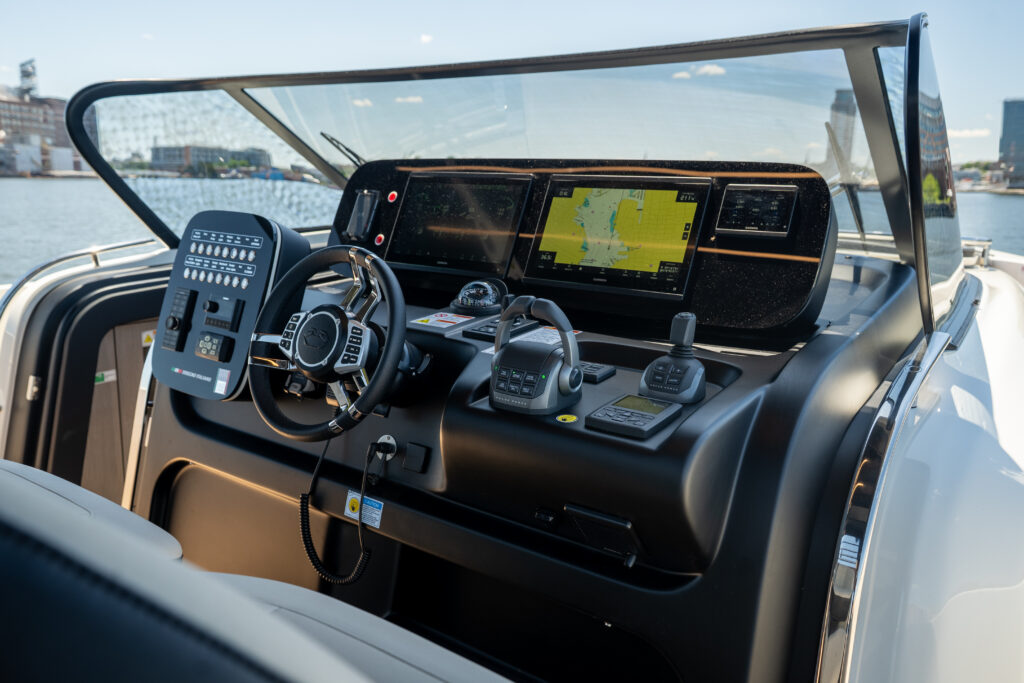
Modern yachts bring radar, GPS, chartplotters, sonar, cameras, engine data, and even digital switching into one cohesive helm environment.
What Integrated Navigation Systems Offer
On a well-equipped luxury yacht, you’ll often see:
- Large multifunction displays (MFDs): Charts, radar, sonar, and camera feeds in one place.
- Autopilot integration: Point-and-click route following with clear visual guidance.
- Engine and systems monitoring: Fuel, range, battery status, tank levels, and alarms at a glance.
- Digital switching: Control of lights, pumps, climate, and more directly from the touchscreens.
- Connectivity: Integration with mobile devices for route planning and system checks.
Advantages for First-Time Captains
- Improved situational awareness: You see what’s around you, what’s below you, and where you’re heading—on one intuitive interface.
- Early issue detection: Clear system alerts allow you to respond proactively rather than reactively.
- Simplified decision-making: The system presents depth, tides, weather overlays, and traffic data to support smarter route choices.
Chesapeake Yacht Center works closely with clients to ensure helm layouts are thoughtfully configured, readable, and aligned with how they plan to use their yacht—whether that’s coastal cruising, family weekends on the Chesapeake Bay, or extended passages along the East Coast.
Why Structured Onboard Training Is Still Essential
Advanced technology makes yachts easier to operate, but it does not replace seamanship. The most important element in flattening the learning curve—especially for families—is structured, hands-on training aboard your specific vessel.
What Effective Onboard Training Should Include
A personalized training curriculum typically covers:
- Docking and undocking drills using joystick controls in real-world conditions
- Safe use of dynamic positioning and when not to rely on it
- Understanding stabilization systems: operation, limitations, and maintenance basics
- Navigation and route planning using your integrated electronics suite
- Rules of the road, local regulations, and right-of-way in busy Mid-Atlantic waters
- Emergency procedures: man overboard, engine issues, weather changes, and crew coordination
- Crew roles and communication: making sure everyone knows how to help safely
Building Confidence for the Long Term
With structured instruction:
- New owners progress from “passenger” to “confident operator” in a matter of days, not seasons.
- Spouses and family members gain familiarity with basic helm and safety procedures.
- Technology becomes a trusted tool rather than a source of overwhelm.
At Chesapeake Yacht Center, training does not end at delivery. Our concierge approach continues with follow-up sessions, seasonal refreshers, and on-call support to ensure you always feel prepared for the next voyage.
Considering Your First Luxury Yacht?
If you’re exploring luxury yacht ownership and want technology and training that make the experience welcoming for the entire family, Chesapeake Yacht Center can guide you through every step—from selecting the right yacht and equipment to personalized onboard training on the Chesapeake Bay and beyond.
Contact Chesapeake Yacht Center today to schedule a private consultation and discover how effortless modern yacht ownership can be.