
A yacht’s advertised range can look reassuring until you discover it was measured at a speed you rarely intend to use. Propulsion matters, but the hull and the load aboard also shape the result.
For buyers balancing Chesapeake Bay weekends with coastal passages, the useful question is how a yacht behaves at your pace and what it takes to maintain it. Pods, conventional shafts, and outboards each offer distinct advantages in handling and ownership.
Pods bring precise control and specialized maintenance
Pods combine an inboard engine with a steerable drive beneath the hull. Directing thrust helps with close-quarters maneuvering, especially on yachts equipped with joystick control.
By directing thrust more horizontally than a typical angled shaft, pods can help improve planing efficiency on a hull designed for them. Any claimed gain is specific to the boats and test conditions being compared.
The ownership trade-off is a more integrated underwater drive and control system. Scheduled drive service and inspections of seals and anodes sit alongside engine maintenance. Ask which tasks require hauling the boat and who can perform them along your cruising route.
Pods can deliver low vibration; cabin noise still depends on machinery placement and insulation.
Shafts offer an established mechanical layout
Conventional inboards send power through a transmission and shaft to a propeller, with rudders providing steering. They offer a well-established mechanical layout and broad service familiarity, useful when cruising away from home.
At low speed, twin engines can be worked independently to turn the yacht; bow or stern thrusters add control in wind. Some shaft boats also offer integrated joystick systems. Availability depends on the particular yacht’s equipment.
Maintenance includes shaft alignment and the condition of bearings and seals, as well as engines and transmissions. Misalignment or propeller damage can create vibration. Engine-room access deserves attention, too: room to reach filters and inspect shaft seals makes routine service more manageable.
Outboards offer speed and accessible engines
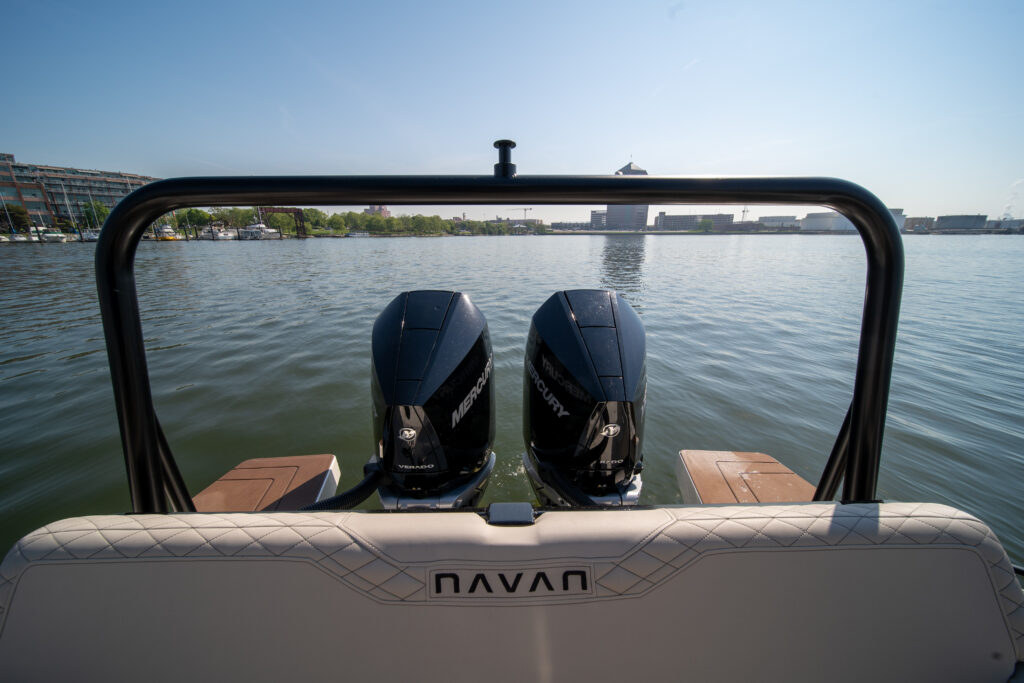
Outboards put the engine and drive outside the hull, freeing interior volume and making much routine engine work accessible. Trimming the drives helps adjust running attitude. Tilting them at rest can reduce appendage draft, but running clearance still depends on the hull and propeller depth.
Multiple outboards can deliver strong acceleration and high cruising speeds. Joystick docking is available on some installations, so verify what is fitted.
Each engine brings its own service schedule and gearcase maintenance. A triple- or quad-engine boat deserves a maintenance estimate for the full installation. Most outboards in this category use gasoline, so compare cost per nautical mile as well as fuel volume when weighing them against diesel yachts.
Noise shifts aft: cabins may be quiet, while cockpit conversations can compete with engines at speed. Listen from the spaces you expect to use.
Compare economy at your cruising speed
Compare total fuel burn for all propulsion engines at the same speed, with comparable passenger and tank loads. A faster boat’s gallons-per-hour figure tells only part of the story; distance per gallon shows what the trip consumes.
Divide speed in knots by gallons per hour to get nautical miles per gallon. For example, at 25 knots and 50 gallons per hour, the result is 0.5 nautical miles per gallon. With 300 gallons allocated to the passage after setting aside a reserve, the calculated range is 150 nautical miles.
Passage planning also accounts for sea conditions and current, which can change the fuel required to reach your destination. Include generator consumption where relevant, and check whether published range figures use nautical or statute miles.
Review fuel burn across several speeds. A planing yacht may travel much farther at displacement speed, yet become markedly thirstier as it pushes through the transition toward planing. The most useful figures reflect the pace you actually enjoy.
Use the sea trial to test your priorities
On the Bay, test low-speed control and visibility from the helm, especially if your home slip has crosswinds or a tight approach. Confirm the yacht’s draft for the creeks you plan to visit.
For coastal plans, pay attention to the speed the yacht can comfortably hold in chop, rather than its best flat-water number. Listen in the salon and sleeping cabins while underway. Then review service records on brokerage boats, or the maintenance schedule on new ones, including access for routine work.
Bring your usual routes and preferred cruising speed to a private appointment with us at Chesapeake Yacht Center. We’ll help you compare new and brokerage yachts around the way you plan to use them.