
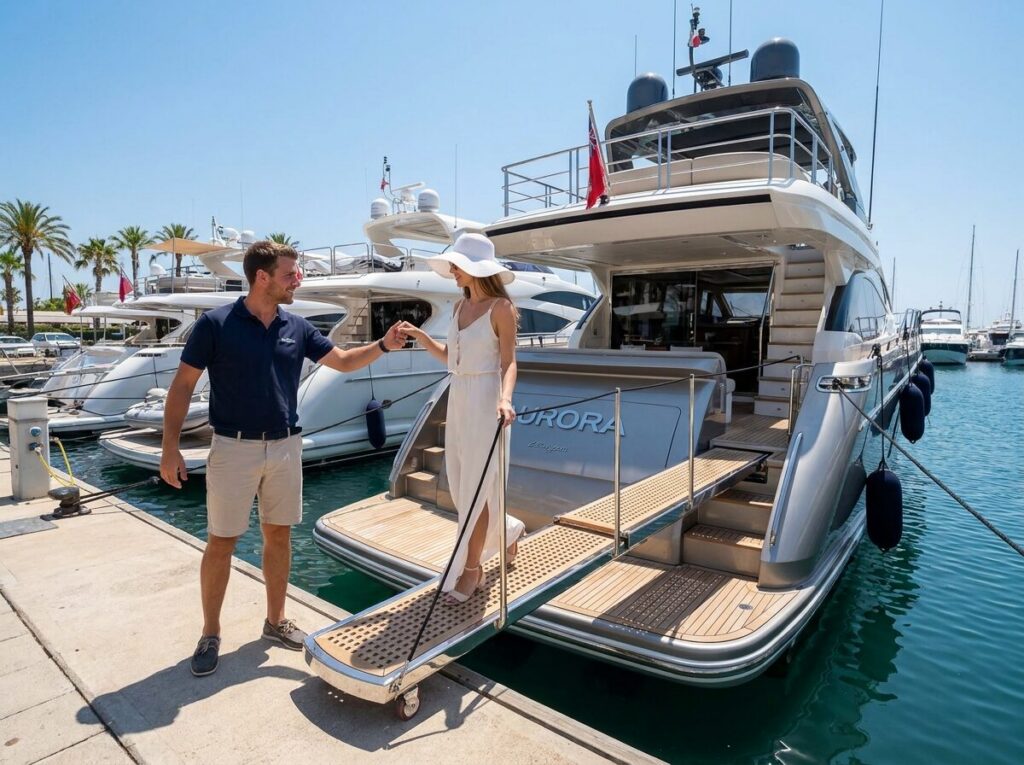
Owner‑Operator Confidence: Making the First 50 Hours Count
The first 50 hours on your new yacht set the tone for years of safe, enjoyable cruising. Whether you’re a first‑time owner or stepping up to a larger, more capable vessel, this early window is where confidence is built, habits are formed, and your investment is protected.
At Chesapeake Yacht Center, we treat those first hours as a structured, concierge‑guided “orientation period” rather than a trial‑and‑error phase. With the right training and routines, you’ll move quickly from feeling tentative at the helm to operating your yacht with calm, informed confidence.
Below are the practical goals we recommend every new owner‑operator focus on during those critical first 50 hours.
1. Docking Confidence: Repetition, Not Guesswork
Docking is where even experienced boaters feel pressure. Larger yachts respond differently, and wind, current, and tight slips can add stress. The key is deliberate practice, not heroic improvisation.
Training goals for the first 50 hours
Aim to:
- Practice docking in a variety of conditions (light wind, moderate wind, slack tide, moving water).
- Use both bow‑in and stern‑in approaches where your slip and marina layout allow.
- Learn to read the boat’s momentum and response to throttle and bow/stern thrusters.
- Practice spring lines and how they can help you pivot or “walk” the yacht.
A simple docking routine
Establish a repeatable routine, for example:
- Pre‑dock briefing with crew: Assign lines and fenders, confirm hand signals or headsets.
- Approach slowly: Idle speed, small corrections only.
- Visualize the final position before turning into the slip.
- Commit to the maneuver: Avoid sudden reversals unless safety requires it.
- Secure lines in sequence: Typically bow, stern, then springs (or per your dock configuration).
A few hours spent with a Chesapeake Yacht Center delivery captain or instructor early on will pay dividends in reduced stress every time you return to the dock.
2. Systems Checks: Knowing Your Yacht “Cold”
Modern yachts from brands like Prestige, Princess, Pardo, Cranchi, Dyna, Jeanneau, and Navan are sophisticated vessels with integrated electronics, advanced propulsion, and hotel‑grade amenities. Confidence comes from knowing what “normal” looks like—and what to check before you leave the slip.
Build a pre‑departure checklist
During your first 50 hours, refine a checklist that becomes second nature. It should include:
-
Engine & propulsion
- Fluid levels (engine oil, coolant, transmission)
- Visual scan for leaks or loose fittings
- Sea strainers clear and closed/open as appropriate
-
Electrical systems
- Shore power disconnected and stowed
- Battery switches in correct positions
- Generator checks (oil, coolant, seacock)
-
Navigation & electronics
- Chartplotter, radar, and VHF powered and functional
- Current charts loaded and route reviewed
-
Safety gear
- Life jackets accessible and sized correctly
- Fire extinguishers in place and in date
- Flares, first‑aid kit, throwable devices on board
-
On‑deck readiness
- Fenders and lines rigged
- Hatches and portlights secured
- Tender secured and davits/garage checked
We recommend running through this list aloud with a family member or crew during your first several outings. It reinforces the habit and gives everyone a sense of ownership in safety.
3. Maintenance Logs: Protecting Value from Day One
Your first 50 hours are when baseline performance and condition are documented. A disciplined maintenance log not only protects your investment—it streamlines warranty claims, resale conversations, and seasonal service planning.
What to record
Set up a simple log (digital or paper) and capture:
- Date and engine hours for every outing
- Fuel and water added (and where)
- Oil changes and filter replacements
- Generator hours and service
- Any alarms, error codes, or unusual noises/vibrations
- Software or chart updates completed
- Professional services performed (waxing, bottom cleaning, detailing)
Over time, this log becomes a service history portfolio. Buyers and surveyors place a premium on yachts with documented care, especially in the competitive Mid‑Atlantic market.
At Chesapeake Yacht Center, our team can help you establish a maintenance cadence tailored to your yacht’s brand, usage pattern, and local conditions on the Chesapeake Bay and Atlantic coast.
4. Emergency Drills: Practice Before You Need It
Emergency situations are rare—but preparation is what turns a potentially chaotic moment into a controlled response. Use your first 50 hours to walk through realistic scenarios with your regular crew and family.
Core drills to practice
-
Man overboard (MOB)
- Assign a spotter who never takes eyes off the person (or buoy).
- Practice the turn, controlled approach, and retrieval.
- Review how to activate a MOB waypoint on your electronics.
-
Engine or generator failure
- Simulate losing one engine: practice steering and docking on a single screw.
- Review how to switch from shore power to generator and back safely.
-
Fire response
- Walk through using fire extinguishers and where to shut down fuel/engines.
- Identify escape routes from each cabin.
-
Loss of electronics or GPS
- Practice basic navigation using visual references and paper charts.
- Review how to call for assistance on VHF (Channels 16 and 9 in our region).
These drills do not need to be dramatic. Short, calm run‑throughs every few outings will build a quiet confidence that everyone onboard can feel.
5. Making the Most of Concierge Training and Support
Owner‑operators who progress fastest in those first 50 hours rarely do it alone. They lean on experts who know the yacht, the region, and the brands.
A structured support program might include:
- On‑water orientation on your specific model: helm systems, joystick controls, trim, and stabilization.
- Docking sessions at your home marina and nearby destinations, including crosswind practice.
- Systems deep‑dive: electrical distribution, tank management, HVAC, watermakers, and digital switching.
- Seasonal checklists for spring commissioning and fall layup in the Mid‑Atlantic climate.
- Ongoing “rapid‑response” support when a light, alarm, or sound has you wondering what’s normal.
At Chesapeake Yacht Center, we view delivery as the start of the relationship—not the end. Our clients know they can pick up the phone for guidance, schedule additional training, or ask for help planning that first longer cruise up the Bay or down the coast.
Set the Tone for Years of Confident Cruising
Those first 50 hours are your opportunity to establish:
- Docking skills that feel calm, not tense
- Systems knowledge that prevents small issues from becoming big problems
- Maintenance habits that preserve performance and resale value
- Emergency readiness that keeps family and guests safe
If you’re considering your first yacht or a larger, more capable owner‑operator vessel, Chesapeake Yacht Center can design a tailored onboarding and training experience around your goals, your boat, and your cruising plans.
To explore new and pre‑owned yachts or discuss owner‑operator training on the Chesapeake Bay and beyond, contact Chesapeake Yacht Center today.