
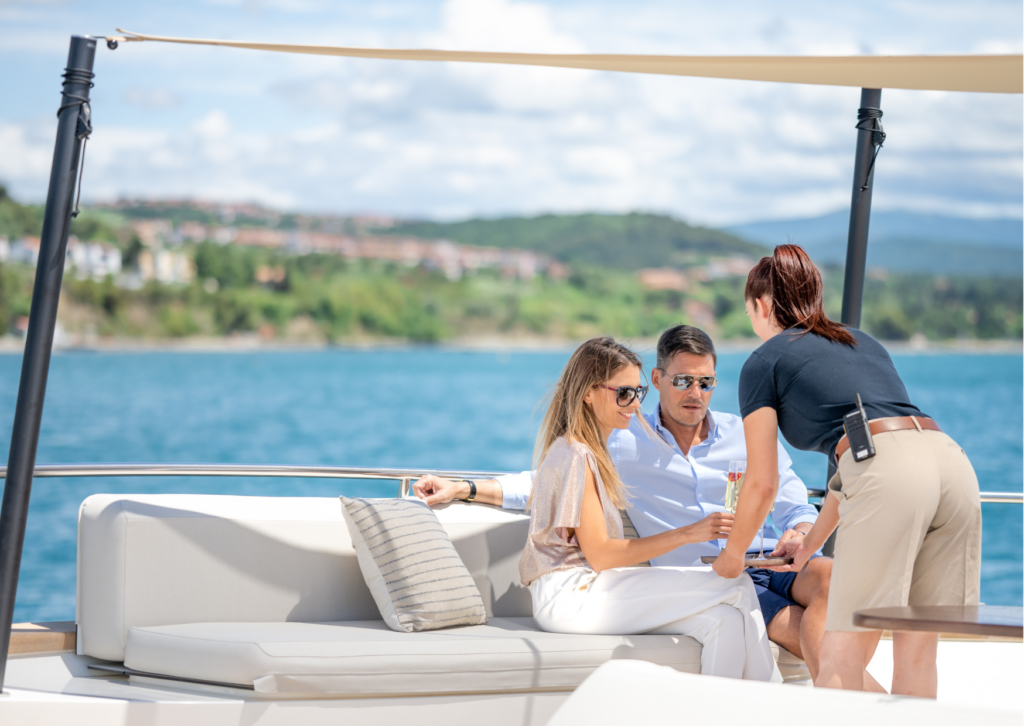
Moving into a larger yacht gives you room for longer stays and more guests. It also changes who spends Saturday morning checking systems and who gets to sit down with everyone else. Choosing between owner-operation and hired crew starts there: how much of the work do you want to do, and how much time can you realistically give it?
Size matters, but it is not the deciding factor
No single length separates an owner-operated yacht from one that calls for crew. Use these ranges as starting points for discussion:
- Around 40 to 50 feet, owner-operation is often practical for an experienced couple, provided both are comfortable with their roles.
- From roughly 50 to 65 feet, handling remains possible for capable owners, but greater windage and heavier lines make planning and dockside coordination more important.
- In the 65- to 80-foot range, the conversation increasingly includes ongoing systems work and whether the layout accommodates paid crew.
These are not thresholds. A familiar 65-foot yacht with good visibility can be less demanding to maneuver than a smaller vessel with awkward sightlines. Joystick controls and thrusters help at the dock; they do not replace judgment or maintain the boat.
As we help buyers compare new and brokerage yachts at Chesapeake Yacht Center, we consider helm visibility and line access alongside accommodations. Those details influence how comfortably you can operate together.
Bring training and insurance into the purchase decision
Before committing to a yacht, ask your insurance provider to review the specific boat and intended operating arrangement. Experience with a smaller boat does not necessarily establish approval to run the next one. An insurer may require a qualified captain for an initial period or documented training, depending on your experience and the yacht.
Build training around actual use. Docking practice matters. So does understanding alarms and knowing what to do when equipment fails. If you cruise as a couple, both people benefit from learning routine procedures and how to respond if the usual skipper cannot take charge.
If you plan to hire crew, discuss both operator approval and coverage for paid personnel with your insurance provider.
Decide who takes responsibility for the ongoing work
Owner-operation does not mean doing every repair yourself. You can remain the skipper while paying professionals for mechanical service and seasonal work. The owner still coordinates that work and makes sure the yacht is ready to leave.
A trip captain takes responsibility for vessel operation within the agreed role. That arrangement does not automatically include cleaning or checks between visits. Agree on duties in advance so tasks do not fall between the owner and captain.
With ongoing crew, routine readiness can sit with someone who knows the boat. That brings a continuing budget and management commitment, including time off and backup coverage. Compare total costs, not simply a day rate against a salary. Occasional captain fees belong beside service bills; an ongoing crew arrangement may also bring payroll and employment-related obligations.
The useful comparison is how much work each arrangement covers, and what remains yours.
Match the arrangement to your actual calendar
For a household aboard two weekends a month, professional support may protect scarce leisure time. A captain for departure and return days can reduce pressure, but someone still has to manage the yacht between trips. Confirm availability before building a holiday itinerary around occasional help.
If you enjoy frequent local cruising on the Chesapeake and want to develop your skills, owner-operation with structured training may be more satisfying. The time spent learning the boat can be part of the pleasure.
A hybrid model can change with your confidence and itinerary. Captain-supported delivery might lead to independent local trips, with professional help again for an unfamiliar coastal passage. Hiring help does not have to mean committing to permanent crew.
Make room for the experience everyone wants
A partner who always handles lines and guests may have a very different view of “relaxing aboard” than the person at the helm. Talk through those roles before deciding how much outside help would be valuable.
A captain can free you to spend more time with family, but one person cannot safely concentrate on a difficult docking while also providing attentive hospitality. Distinguish help operating the yacht from a broader guest-service role.
If overnight crew is part of the plan, inspect the crew accommodation during yacht selection. Consider whether it provides suitable living space while preserving the privacy your household expects. That is a layout decision as much as a staffing decision.
If you are considering a larger yacht, arrange a private appointment with us at Chesapeake Yacht Center. We can compare new and pre-owned options around how you want to operate, and discuss training and ownership support alongside the purchase.