
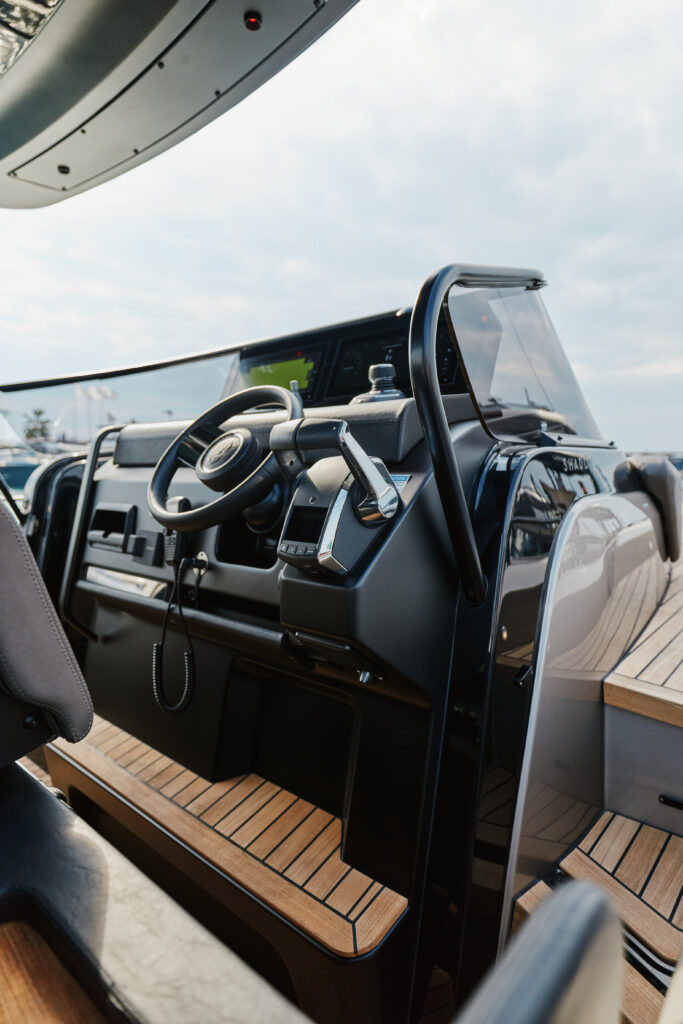
A quiet creek on Saturday and a coastal passage next month can ask very different things of the same yacht. Shallow draft widens your options on the Bay, while offshore comfort depends on hull behavior and operating choices as much as equipment. The best fit starts with the routes you expect to run, rather than the longest list of features.
Read draft as an operating number
Start with your shallowest regular destination and longest likely passage. Include your home berth and its approach channel. A boat that clears the marina entrance only under favorable conditions can complicate every weekend, even if it suits an occasional coastal trip beautifully.
Published draft needs context. Confirm the loading condition behind the specification and whether the measurement includes the lowest running gear. Fuel and cruising stores increase displacement and can increase draft. On the Chesapeake, wind can alter water levels as well as tides. Leave clearance below the boat for those changes and for motion, rather than planning around an exact match between charted depth and published draft.
Choose a hull for your cruising speeds
Deep-V planing hulls can soften wave impacts at suitable speeds, but often require more power than flatter-bottomed designs of comparable size and weight. Flatter sections can offer efficient running and good initial stability, yet may pound harder when driven into short, steep chop.
Displacement hulls generally favor efficient slower passages. Semi-displacement designs offer flexibility across a broader speed range, with substantial differences between individual boats. Loading and weight distribution further influence the ride.
A useful sea trial explores normal cruise and reduced-speed behavior, where conditions permit. When head seas make fast running unappealing, a comfortable slower pace becomes valuable. For coastal plans, assess the yacht’s design suitability and overall condition alongside ride comfort.
Compare the complete propulsion installation
Straight shafts place propellers and rudders below the hull; pods place steerable drive units there. Their draft and grounding exposure depend on the actual installation. Compare the lowest point of each candidate yacht rather than choosing by propulsion label alone.
Outboards and sterndrives can tilt, but advertised drive-up draft may describe floating clearance rather than a usable running condition. Cooling-water requirements and the manufacturer’s operating guidance determine how far a drive can safely be raised underway.
Waterjets remove exposed propellers, although intake depth and debris remain considerations. For fuel efficiency, look at consumption data for the specific boat and engine combination at the speeds you intend to use.
Match stabilization to the motion
Gyros and fins primarily control roll, the side-to-side motion that can make an anchorage uncomfortable. They have limited influence on pitching or the sharp impacts of meeting head seas. Course and speed remain central to comfort.
A gyro works inside the yacht, avoiding an external stabilizing appendage. It adds weight and occupies machinery space, with power and cooling requirements that matter to the installation. Check startup time and maintenance access. An appropriately sized gyro can reduce roll at rest and underway, with results depending on the boat and conditions.
Fins generate stabilizing forces in the water. Conventional systems rely on forward motion, while systems designed for at-rest operation actively move their fins to counter roll. Confirm that capability on the particular yacht. Fin position can affect underwater clearance and adds exposed equipment.
For a family spending long afternoons at anchor, at-rest performance may deserve more weight than it would for an owner primarily making fast day passages.
Build range from a realistic fuel budget
Start with usable fuel, subtract a deliberate reserve, then multiply the passage allowance by realistic nautical miles per gallon.
For illustration, a hypothetical yacht making 20 knots over the ground while burning 40 gallons per hour achieves 0.5 nautical mile per gallon. A 200-gallon passage allowance after reserves therefore suggests 100 nautical miles under those conditions.
That figure is a starting point. Head seas and a fouled bottom can increase fuel burn; current changes progress over the ground. Generator consumption also belongs in the budget, including fuel used during extended stays at anchor.
Compare consumption at several speeds, then account for detours and a realistic alternative fuel stop. Set the reserve for the passage and expected conditions rather than treating one percentage as universal. A practical range calculation leaves room to change the plan.
Choose the complete yacht
Getting more capability from a given length means weighing equipment against the whole boat. A stabilizer installation takes space and adds weight; carrying more fuel changes loading. The right balance comes from the cruising you will actually do, including the destinations you would be reluctant to give up.
On a pre-owned yacht, an independent survey and appropriate mechanical inspections help establish the condition of the systems you expect to rely on.
At Chesapeake Yacht Center, we help you compare new and pre-owned yachts around the way you plan to cruise. Bring your shallowest destination and longest intended passage to a private appointment with us, and we can focus the search on boats that fit both.