
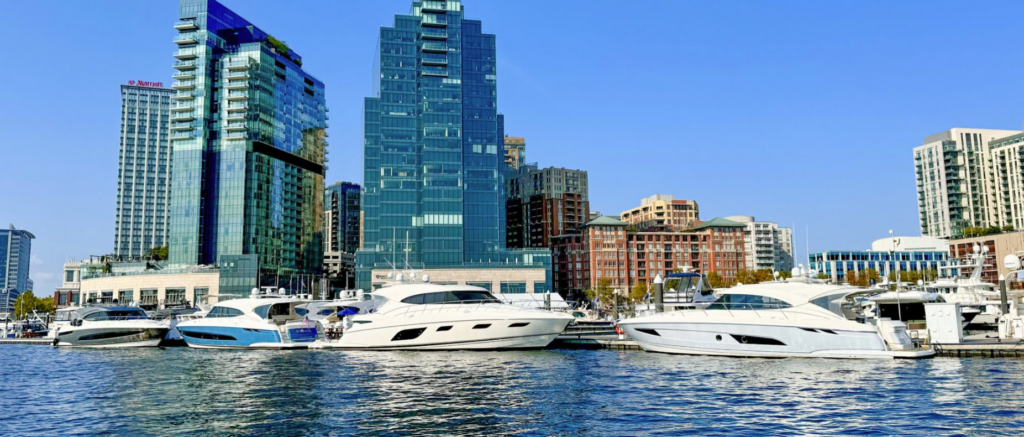
The most useful first cruise ends close to where it began, with a clearer understanding of your yacht. A shakedown gives you room to sort out a puzzling battery reading or an unclear docking command while support is nearby. In Chesapeake waters, short legs and easy return options leave more attention for the boat and the people aboard.
Make the dockside checks count
Use the delivery handover to identify normal engine readings and emergency shutoffs. Confirm usable fuel and a suitable reserve for the planned outing; a short route still deserves a fuel plan.
At the dock, operate the heads and freshwater fixtures. Watch for leaks or a pump that keeps cycling after taps are closed. Check bilges and confirm shore-power operation. Review the onboard-power switching procedure for your yacht. Test smoke and carbon-monoxide alarms according to their manufacturers’ instructions.
Agree on docking roles and simple commands. Fit life jackets before departure, and make sure another person knows how to call for help on the VHF. Resolve any safety-critical fault before leaving.
Choose a route with an easy exit
Begin with a daylight out-and-back in protected water, close enough to return easily. Leave room in the schedule to stop checking systems and simply handle the boat. Choose a settled forecast, not merely a convenient delivery date. Check current charts and notices before selecting your turn-around point.
From Baltimore, a suitable reach of the Patapsco may fit that first run. A later hop toward the Magothy or Severn adds a destination, but may also add open-Bay exposure. Wind against current can produce uncomfortable chop; short mileage is not a promise of easy conditions.
Once basic handling and essential systems are behaving as expected, plan one night at a nearby marina with a straightforward approach. That lets you learn evening and morning routines without also learning an unfamiliar anchorage. An Atlantic inlet transit or long coastal passage can wait.
Pick the berth before the restaurant
Make the first overnight stop easy on the crew. A suitable berth matters more than waterfront dining. When reserving, confirm:
- Approach and berth depths for your draft at the expected water level, plus any recent shoaling reports.
- Slip dimensions and room to turn, including likely wind or current across the berth.
- Shore-power compatibility with your yacht’s electrical requirements and connections.
- Dockhand availability at your arrival time and the marina’s working VHF channel.
Have a backup berth or return plan if conditions make the approach uncomfortable. Chesapeake water levels can be affected by wind as well as tide, so check local conditions rather than relying on a tide prediction alone.
Check systems without losing the lookout
Keep one person focused on the helm and lookout while another handles the checklist. If everyone is occupied with navigation or boat handling, postpone the test.
Compare engine readings at idle with those at a normal cruising setting, staying within any engine break-in limits. Note engine speed when recording temperatures so the readings have context. Record unfamiliar vibration or noise separately, and check whether battery charging behaves as expected. Change one system or setting at a time so an unexpected result is easier to trace.
Practise low-speed handling in clear water with adequate depth, away from traffic. Before returning, agree which side will be alongside and set lines and fenders while it is safe to do so. A missed approach is a reason to reset, not hurry.
If an alarm sounds or a safety-critical fault appears, stop the test sequence and follow the yacht’s emergency guidance. Completing the route is secondary.
Make the next outing better
Once safely secured and shut down, check for new leaks and review the log. Separate faults that prevent another outing from questions to raise at follow-up.
For each concern, record what happened and the operating conditions. Add a photo or alarm code where practical, without distracting anyone from boat handling. “Freshwater pump cycles with every tap closed” gives a service team more to work with than “water system problem.”
Ask each crew member what felt uncertain. Sometimes the best next step is another short run on the same route, with fewer unknowns and a calmer approach to the dock.
At Chesapeake Yacht Center, we can help coordinate your delivery and provide training as you get to know your yacht. Speak with us about preparing for your first Chesapeake shakedown.