
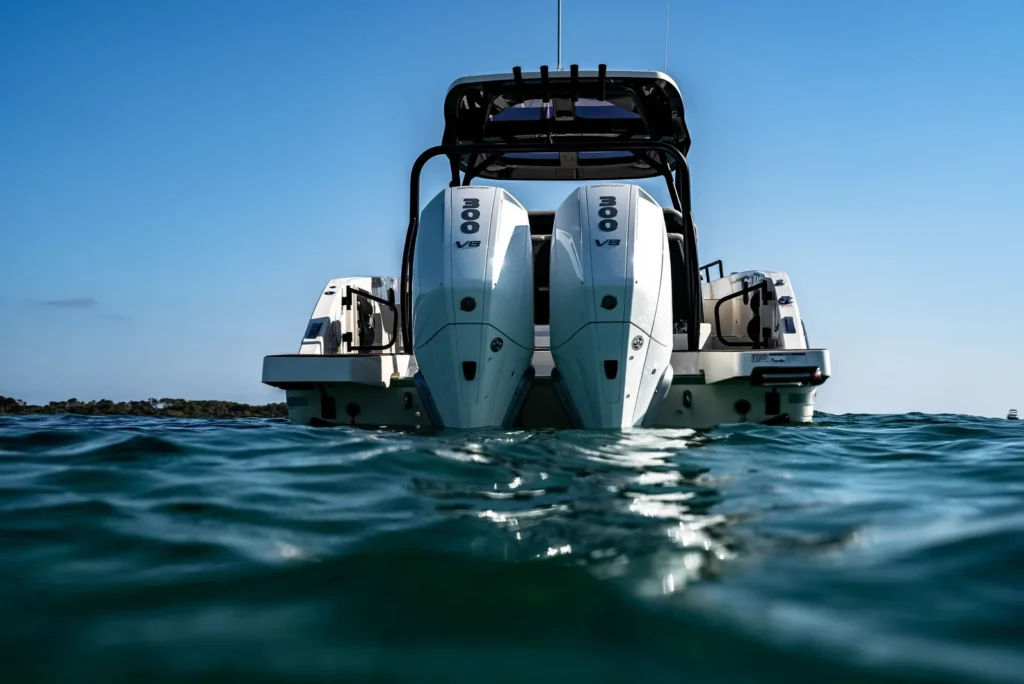
Choosing propulsion for a premium cruiser starts with a practical question: which boat will suit your usual passage, rather than simply produce the highest top speed? A shallow Chesapeake creek and a long coastal run place different demands on the same yacht.
Modern outboards, conventional shaft drives, and Volvo Penta IPS each bring useful strengths. Comparing complete boats at your intended cruising speed reveals more than comparing engine badges.
Compare the cruise you will actually use
Outboards can deliver lively acceleration and high top speeds on hulls designed around them. Inboard diesels are common on heavier cruising yachts, whether driving conventional shafts or Volvo Penta IPS pods. IPS uses steerable pods with forward-facing propellers, while conventional shaft boats use rudders for steering.
For fuel economy, request total consumption across all engines at the same cruising speed. Nautical miles per gallon is more useful than gallons per hour alone; running costs also depend on gasoline versus diesel prices. Assess range using usable fuel capacity after setting aside a reserve, with realistic loading and sea conditions.
A sea trial gives you a chance to judge comfort at your intended cruise pace. Try close-quarters handling, too. Joystick docking is available with IPS and many multi-outboard packages, and some shaft boats integrate joystick controls with thrusters. The installed equipment determines the experience.
Read draft figures carefully
Many outboard installations allow the lower units to tilt clear of the water while stopped, reducing immersed gear between trips. Underway, the engines require adequate immersion for cooling and propulsion. An engines-up draft figure is therefore a poor guide to operating depth.
Shaft propellers and rudders stay below the hull, as do IPS pods. Compare loaded, operating draft and identify the lowest underwater point. On the Chesapeake, clearance for changing water levels and shifting shoals belongs in your planning, beyond the depth shown on the specification sheet.
Price the whole propulsion system
Outboards place much of the machinery outside the accommodation, potentially freeing interior volume. Routine engine access can be convenient, although working over the transom may call for a lift or haul-out. Three or four engines also multiply routine service tasks.
For inboards, inspect the space around each engine. Access to filters and seawater pumps matters more than an engine room that looks generous from the hatch. On shaft boats, seals require inspection, while alignment issues can lead to vibration or bearing wear.
IPS requires engine servicing plus pod-specific work, including drive lubricant and seals according to the manufacturer’s schedule. Some pod work requires a haul-out and technicians familiar with the drive. Their availability near your home port and intended cruising grounds can affect both cost and downtime.
A written maintenance estimate covering several seasons gives a clearer ownership picture than the next oil change alone. For a pre-owned yacht, include major scheduled work coming due.
Listen from the helm and the cabin
Modern outboards can be quiet at idle, with a more noticeable exhaust note at speed. Inboard diesels may produce low-frequency sound or vibration. Insulation and installation quality strongly influence what reaches the accommodation.
During a sea trial, listen from the helm and the berth at cruising speed. Notice whether normal conversation feels comfortable.
Then consider the stern. Outboards occupy transom space that a shaft or IPS layout may leave available for a bathing platform or tender arrangement. That trade-off can matter every time you swim or launch a tender.
Resale follows the boat and its market
Buyers tend to favor propulsion that fits the yacht’s size and use. Outboards may attract buyers seeking fast day cruising; diesel inboards can appeal to those planning longer passages. Preferences vary by region and model, so a blanket prediction about which system holds value better has limited usefulness.
Documented service and current condition give buyers firmer evidence. Upcoming major maintenance affects the purchase budget, even when the asking price looks attractive. Model-specific comparisons, using reliable sold-boat information where available, provide better context than asking prices alone.
For a pre-owned yacht, combine a survey with engine and drive inspections by appropriately qualified technicians. Review any grounding repairs and verify that scheduled work is current.
At Chesapeake Yacht Center in Baltimore, we guide buyers through new and brokerage yacht selection with their cruising plans in view. Arrange a private appointment with us to compare propulsion layouts against your home-water depths and the passages you want to make.