
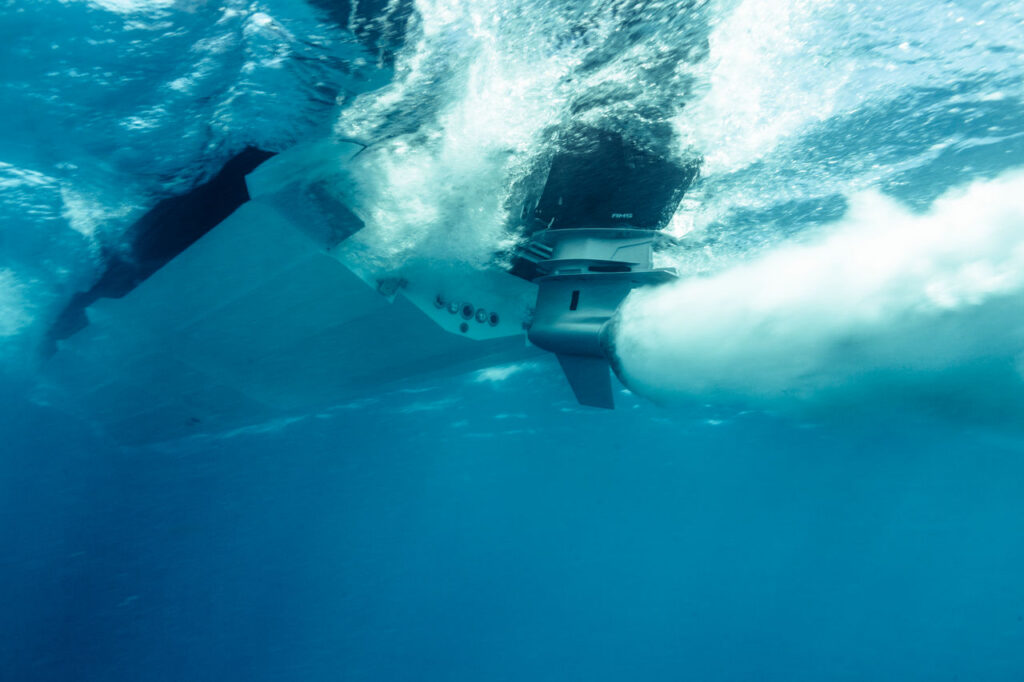
A propulsion system earns its place long after the first acceleration run. You feel the choice while backing into a slip in a crosswind, scheduling annual service, or deciding whether a coastal passage leaves a comfortable fuel reserve. For Chesapeake buyers, the best fit starts with how you expect to use the yacht.
First, separate engine location from drive type. Outboards combine the engine and drive outside the transom. Inboard engines sit inside the yacht and can power conventional propeller shafts or pod drives, among other arrangements. Most recreational outboards use gasoline, while many cruising yachts with shafts or pods use diesel engines.
Outboards offer flexibility at the stern
Outboards suit many dayboats and fast cruisers. Steering turns the engines to direct thrust, and many installations allow the lower units to tilt clear of the water when stopped. Raising them can reduce draft at rest, although safe operating depth still depends on the hull and the manufacturer’s limits.
The engines sit outside the accommodation, which can simplify access for some service tasks. Multiple outboards also bring multiple maintenance schedules and parts requirements. Compare the cost of servicing the complete installation, rather than a single engine.
Give the stern layout a close look. Engine placement affects swim-platform access and room for handling lines. Picture boarding from your usual dock or getting back aboard after a swim: those details will matter every weekend.
Shaft drives offer an established service path
Conventional shaft-drive yachts typically connect inboard engines through transmissions to propellers beneath the hull, with rudders providing steering. This familiar arrangement is common on larger cruising yachts, and service expertise is broadly available.
Alongside engine maintenance, ownership involves checking shaft seals and bearings, with attention to alignment and running-gear condition. Engine-room access deserves a careful inspection, too. Reachable filters and service points make routine checks more manageable.
Look at the yacht’s actual draft and underwater arrangement. Some designs give propellers more protection than others. For a shallow creek or marina approach, clearance beneath the lowest appendage matters more than the general description “shaft drive.”
Pods pair maneuverability with specialized service
Steerable pod drives redirect thrust beneath the yacht, and many installations pair them with joystick control. That combination can make close-quarters handling more approachable, especially when moving into a larger boat.
Certain hull-and-pod combinations also deliver efficiency advantages or allow more accommodation space. Compare the actual yachts’ performance data and layouts to judge whether those benefits carry through to your shortlist.
Drive fluids and seals require scheduled attention, along with corrosion protection. Ask which service tasks require a haul-out and where technicians familiar with the system are available near your home port or cruising route.
For a brokerage yacht, documented drive maintenance is particularly useful. A technical inspection can help assess condition and evidence of previous impact damage, which may involve substantial repairs to underwater drive components.
Compare range at your intended cruising speed
Hull design and loaded weight can influence fuel use more than the propulsion category. Look for performance figures at the speed you expect to maintain, and check how closely the test boat’s loading matches your likely cruising condition.
Divide total fuel burn in gallons per hour by speed in knots to find gallons per nautical mile. This gives you a useful basis for comparing fuel required over the same distance, even when two yachts cruise at different speeds.
Build a passage plan around usable fuel with an appropriate reserve. Coastal weather may force a slower pace or a longer route, changing both consumption and arrival time. Confirm fuel availability at practical stops as well. A comfortable passage between dependable fuel docks is a better ownership measure than maximum advertised range.
Evaluate control at the dock and clearance on the Bay
Joystick systems are available on some outboard and shaft-drive yachts as well as pod boats. Compare the equipment fitted to the specific yacht, including any thrusters, and ask how the controls work together.
During a sea trial, spend time moving slowly and reversing. Notice the view from the helm and how readily you can judge distance from the dock. Windage and current affect every propulsion arrangement; a calm-water demonstration gives only part of the handling picture.
For Chesapeake cruising, check draft with the running gear in its operating position against the places you expect to visit. Variable depths and occasional floating debris make underwater clearance worth understanding before choosing a home slip or favorite anchorage.
Brackish and coastal water also make corrosion protection part of ownership across propulsion types. Ask about the specified anodes and inspection schedule for the particular installation, then factor that work into your annual service planning.
At Chesapeake Yacht Center, we help buyers compare new and brokerage yachts around their cruising plans and ownership priorities. Arrange a private appointment with us to explore available models and discuss the propulsion choices that fit your time on the Bay and beyond.