
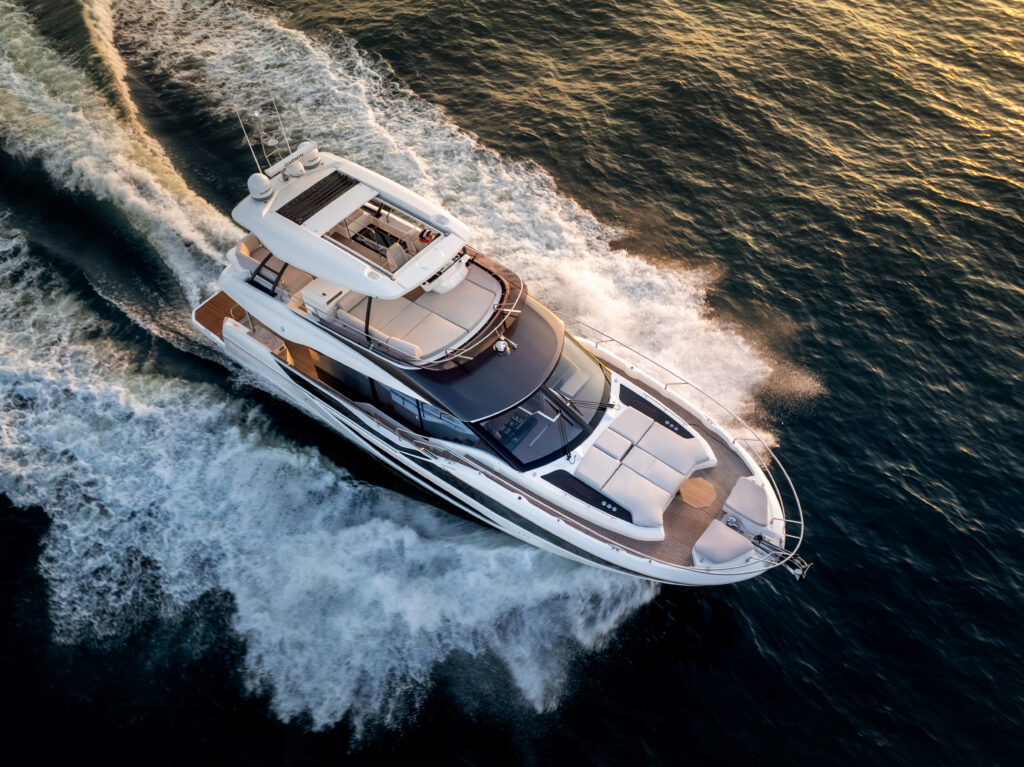
Outboards vs. Inboards on Premium Cruisers & Dayboats: Which Fits Your Lifestyle?
For buyers exploring performance‑oriented brands like Pardo, Jeanneau, and Navan, propulsion is no longer an afterthought. The choice between outboard and inboard power shapes how your boat rides, how you use the deck, what your maintenance looks like, and ultimately how you enjoy your time on the water.
At Chesapeake Yacht Center, we help clients weigh these trade‑offs every day. Below is a clear, side‑by‑side look at outboards versus inboards on premium cruisers and dayboats, with a focus on:
- Ride quality and handling
- Maintenance and serviceability
- Range and efficiency
- Noise and vibration
- Deck usability and onboard lifestyle
Ride Quality & Handling
Outboards: Agile and Sporty
Modern outboard‑powered cruisers and dayboats — such as many configurations from Jeanneau and Navan — deliver:
- Crisp, responsive handling at low and medium speeds
- Excellent maneuverability in marinas using multiple engines and joystick controls
- Shallow draft capability, opening up sandbars, coves, and backwaters that deeper inboard setups can’t reach
For owners prioritizing fast runs to lunch, watersports, and day cruising, outboards often feel more playful and confidence‑inspiring, especially for those transitioning up from smaller center consoles or bowriders.
Inboards: Composed and Confident
Inboard power, common on many premium motor yachts and some larger Pardo models, typically offers:
- More planted ride in a seaway thanks to the weight lower and more central in the hull
- Predictable tracking offshore and at higher speeds
- Robust performance for extended passages and heavier displacement hulls
For those who regularly run in choppier conditions or prioritize offshore stability and long‑distance comfort, inboards often deliver a more “yacht‑like” feel.
Maintenance & Service Considerations
Outboards: Accessible and Modular
The surge in high‑horsepower outboards has been driven partly by their serviceability:
- Engines are fully external, making routine service straightforward
- Many service items (spark plugs, filters, lower unit service) are relatively quick
- If a major issue occurs, an outboard can be removed and replaced without opening up the boat
On premium cruisers and dayboats, triple or quad outboard configurations can provide built‑in redundancy: you can run home on reduced power if one engine has an issue.
However, performance‑minded owners should be aware:
- Multiple outboards mean more systems to maintain (more filters, more oil changes)
- Tight engine spacing on the transom can require specialized technicians for complex work
Inboards: Engine Room Systems
Inboard‑powered boats centralize major systems in a dedicated engine room:
- All propulsion components, generators, and often key systems are contained and protected
- Technicians can work standing up in many engine rooms, making complex repairs more manageable
- Bigger service intervals are common on many diesel inboards, but individual service visits can be more in‑depth
For owners planning long‑term cruising and higher annual hours, the durability and service life of inboard diesels can be a compelling advantage, especially when paired with a trusted service partner.
Range & Fuel Efficiency
Outboards: Strong Performance, Variable Efficiency
High‑output outboards deliver impressive hole shot and top speed, ideal for:
- Quick day trips
- Watersports
- Covering distance in short windows of good weather
Fuel efficiency on outboards is often excellent in the mid‑cruise range, but:
- Pushing to the upper end of the RPM band can lead to steeper fuel burn
- Multiple engines can multiply consumption at high speeds
For the typical owner using a Pardo, Jeanneau, or Navan dayboat for regional runs and weekend trips, outboards provide very usable range, especially when run at efficient cruise speeds.
Inboards: Long‑Legged Cruising
Diesel inboards on larger cruisers and motor yachts are engineered for extended range:
- Lower specific fuel consumption at set cruise speeds
- Designed to run for long stretches of time at steady RPM
- Large, integrated fuel tanks that support genuine coastal cruising
If your vision includes multi‑day trips, offshore legs, and fewer fuel stops, inboards often win on sheer range and long‑term fuel economics.
Noise, Vibration & Onboard Comfort
Outboards: Quieter Than Ever, But Still Aft‑Biased
Modern outboards are significantly quieter than older generations:
- Smooth, quiet idle and low‑speed operation
- Minimal smoke and odor compared to legacy two‑stroke designs
However, because engines are mounted on the transom, you may notice:
- More sound and vibration at the stern cockpit, especially at higher RPM
- A slightly livelier acoustic environment during fast runs
For social dayboating, the noise profile is often very acceptable — particularly with premium sound insulation and quality helm seating — but aft deck conversations at speed can require raised voices.
Inboards: Refined Acoustic Experience
Inboards sit in a sound‑insulated engine room, which helps:
- Reduce perceived noise at the cockpit and bow
- Limit vibration through the deck structure
- Contribute to a more relaxed, luxury‑yacht ambiance at cruise
Owners focused on quiet sunset cruises, extended entertaining, and overnight comfort often gravitate to inboards for their more serene onboard environment.
Deck Usability, Layout & Storage
Outboards: Versatile Cockpits and Beach Club Concepts
Premium outboard cruisers and dayboats have transformed how aft decks are used:
- Engines on the transom free up the interior for storage and living space
- Fold‑down terraces and extended platforms create “beach club” zones right at the waterline
- Systems are often simplified, opening up room for gear, toys, and coolers
Brands like Navan and Jeanneau leverage outboards to maximize cockpit versatility — ideal for active families, watersports, and social day cruising.
Inboards: Clean Swim Platforms and Luxury Flow
Inboard propulsion enables:
- A full‑beam swim platform free of engines, perfect for lounging, swimming, and tender access
- Seamless indoor‑outdoor flow from salon to cockpit to water
- Larger under‑cockpit storage for tenders, toys, and equipment on certain models
Owners who see the aft deck as an extension of their living and entertaining space — more akin to a terrace than a staging area for watersports — often love the unobstructed transom and elegant layouts inboard boats provide.
Matching Propulsion to Your Lifestyle
To align propulsion with how you actually plan to use your yacht, consider:
-
How you cruise
- Fast day trips, sandbars, and nearby destinations → often outboards
- Multi‑day cruising, offshore legs, or seasonal migration → often inboards
-
Where you cruise
- Shallow bays, rivers, and backwaters → outboards gain an edge
- Deeper coastal routes and open water → inboards offer offshore confidence
-
How you entertain
- Active, watersports‑driven days with frequent swimming → outboards or inboards with strong beach access
- Refined, quiet entertaining, al fresco dining, and overnights → inboards often feel more “yacht‑like”
-
Your maintenance preferences
- Convenient access and modular service → outboards
- Centralized systems and long‑term diesel durability → inboards
Explore the Right Fit with Chesapeake Yacht Center
Choosing between outboards and inboards is less about “better or worse” and more about building the right boating experience around your life. Chesapeake Yacht Center represents a curated portfolio of both outboard and inboard cruisers and dayboats from Pardo, Jeanneau, Navan, and other leading brands, and our team is here to guide you through the nuances.
Schedule a private consultation or on‑water viewing with Chesapeake Yacht Center, and let us help you match the perfect propulsion package to the way you want to boat.