
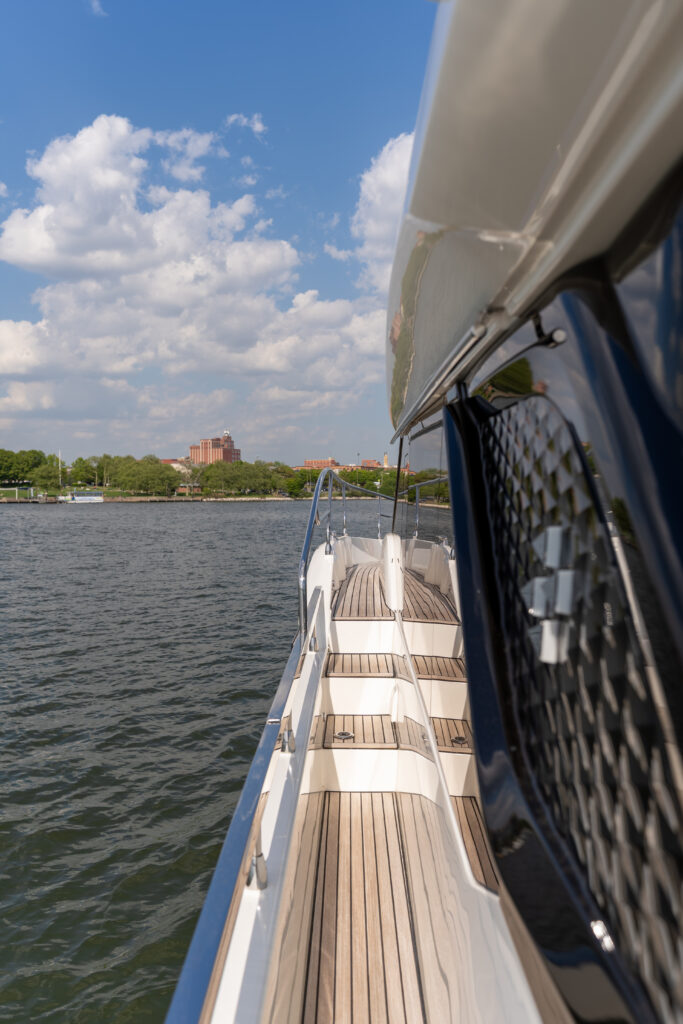
A yacht can spend winter quietly in its slip while its anodes continue to wear and growth remains below the waterline. Fewer engine hours do not put underwater maintenance on hold. For yachts kept afloat on the Chesapeake, a short check can help determine whether a mid-season diver visit is worth arranging.
Cold water slows growth, not the need for protection
Sacrificial anodes protect underwater metal components by corroding in their place. That galvanic process does not depend on the engines running, and winter temperatures do not switch it off.
Although boaters commonly call anodes “zincs,” the correct material is not always zinc. Aluminum alloys and magnesium have their own applications. Selection depends on the equipment manufacturer’s guidance and the water where the yacht operates, an important distinction in the Chesapeake’s varying salinity.
Biological growth generally slows in cold water, but existing fouling can remain attached long after growth slows. Fouled propellers can affect performance when cruising resumes. Around intake screens, even modest growth can restrict openings important to cooling. An idle yacht is not necessarily a clean yacht.
Build the timing around a baseline
A fall haulout or underwater inspection provides a useful starting point. Dated photographs show what the anodes and running gear looked like, while service notes establish what was replaced or cleaned.
After a move to an unfamiliar berth, electrical work, or a change in anode material, an early follow-up within a few weeks can help establish a wear pattern. It is a starting point, not a guarantee that every yacht can safely wait that long.
For a yacht with a known maintenance history, a midwinter check is a practical planning marker. Shorten the interval when previous inspections show substantial consumption or recurring fouling. If the yacht will remain idle for months, allow time for another look before spring cruising rather than discovering a problem on departure day.
What a quick check can tell you
Start with the latest service report and whatever is safely visible from the dock. Depending on the yacht, that may include portions of trim tabs or transom hardware.
Look for findings that justify closer inspection:
- Anodes approaching roughly half consumed, a common replacement point unless the manufacturer specifies otherwise.
- Missing or loose anodes, particularly where wear has weakened their attachment.
- Fresh pitting on protected metal, or anode consumption noticeably faster than the previous inspection showed.
- Heavy growth on visible running gear or around underwater fittings.
A clean waterline does not establish that the propellers or intake screens are clear. Likewise, an accessible anode cannot tell you the condition of every anode aboard. When important components are out of view and there is no recent inspection record, uncertainty itself is a reasonable reason to arrange an underwater check.
When a mid-season diver earns the visit
A diver visit is especially useful when anode condition is unknown or visible deterioration suggests that waiting until spring could leave components unprotected. It can also help determine whether fouling warrants attention before the yacht returns to regular use.
Ask a qualified, insured diver familiar with your propulsion system for dated photographs and location-specific findings. A useful report identifies which anodes were inspected and estimates their remaining material. It can also document growth on the running gear and around intake screens, rather than offering only a general impression that the bottom looks clean.
Inspection does not automatically mean cleaning. Any cleaning method should suit the antifouling coating and comply with marina rules. Aggressive scraping can damage a coating, and some conditions are better addressed during a haulout.
New vibration or reduced performance calls for investigation, not an automatic diagnosis of fouling. If an engine overheats, stop it as soon as it is safe to do so and have the cause assessed rather than continuing to run it as a test.
Fast anode loss deserves diagnosis
If replacement anodes disappear unusually quickly, repeatedly fitting new ones leaves the cause unresolved. Unsuitable anode material or an electrical problem may be involved. A qualified marine technician or electrician can assess the installation, including relevant bonding and shore-power systems.
An apparently untouched anode is not always reassuring, either. If the component it is meant to protect shows corrosion, poor electrical contact may be preventing the anode from doing its job.
Keep dated photographs with brief notes on consumption. That simple record makes future inspection timing more useful than a generic schedule shared by every yacht in the marina.
At Chesapeake Yacht Center, we offer seasonal services and ongoing ownership support. Contact us to discuss your yacht’s winter service needs and prepare for the next stretch of Chesapeake cruising.