
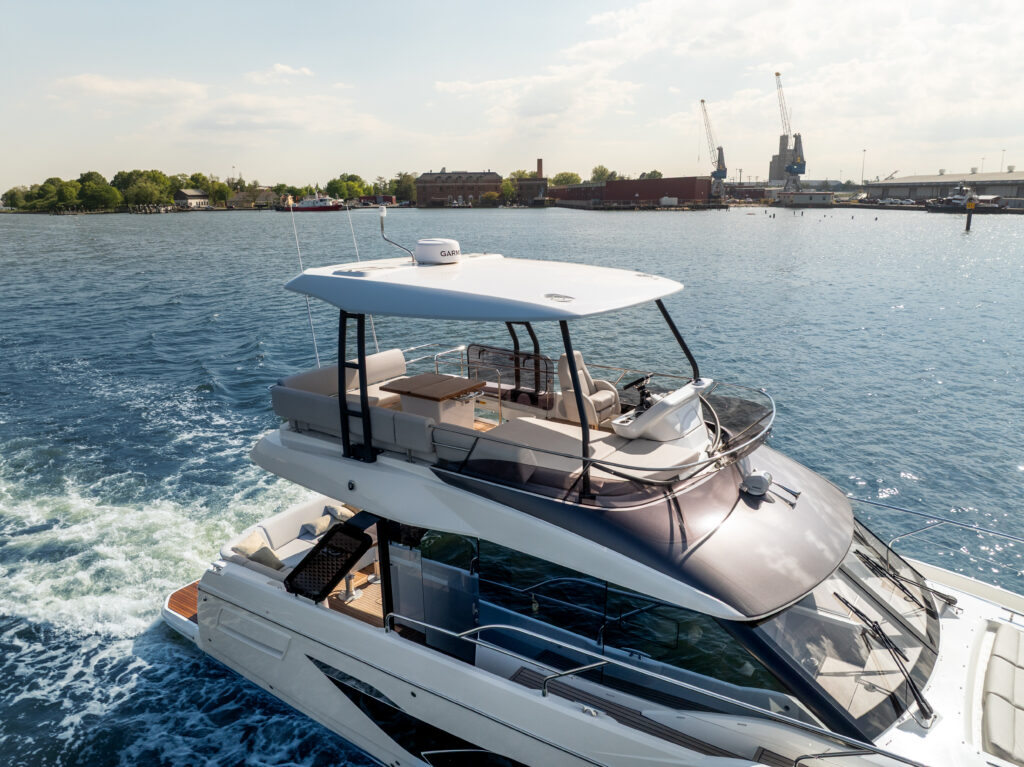
The Smart Upgrade Path: When to Step From a 35–45’ Cruiser Into a 50–70’ Motor Yacht
For many Chesapeake Bay and Mid-Atlantic boaters, a 35–45 foot cruiser is the perfect entry into serious yachting. Eventually, though, cabin space, storage, and range can start to feel limiting—especially for growing families who are spending more nights aboard and cruising farther afield.
Stepping into a 50–70 foot motor yacht is a significant move, both financially and in terms of lifestyle. The key is upgrading for the right reasons, at the right time, so the added volume and amenities meaningfully elevate every hour you spend on the water.
Below are practical milestones—drawn from real-world ownership patterns—that signal when it’s time to consider a larger motor yacht, and what to think about as you make that transition.
1. Your Crew Has Outgrown the Cabin Layout
On a 35–45’ cruiser, the layout typically works well for:
- A couple with occasional guests
- A young family with small children
- Weekend or long-weekend cruising
You may be ready for 50–70’ when:
- Privacy is becoming an issue. Teenagers, grandparents, or frequent guests are sharing convertible settees or tight mid-cabins.
- Sleeping arrangements feel like Tetris. You’re reorganizing people and bags every night, and “someone on the sofa” has become the norm.
- You entertain two generations. You want separate spaces so kids can wind down while adults still socialize.
What changes with a 50–70’ motor yacht:
- True three- or four-stateroom layouts, often with two or more en suite heads.
- A full-beam owners’ suite with proper wardrobe and storage.
- Better sound isolation between cabins and social spaces.
- Optional crew cabin that can double as overflow guest space on owner-operated yachts.
For many growing boating families, consistent pressure on sleeping arrangements is one of the clearest signs that more volume will dramatically improve life on board.
2. Your Time on the Water Is Shifting From Weekends to Vacations
A 35–45’ cruiser is exceptional for:
- Day boating
- Cocktail cruises
- Long weekends around the Bay
You may be ready to move up when:
- One- and two-week cruises are becoming the centerpiece of your boating season.
- You are planning coastal runs to New England, the Carolinas, or the Bahamas.
- You want to be self-sufficient at anchor for several days at a time.
A 50–70’ motor yacht typically adds:
- Larger fuel capacity and more efficient displacement/semidisplacement hull options for longer range.
- Bigger freshwater and holding tanks for extended time off the dock.
- Substantial galley upgrades: full-size refrigeration, more storage, real counter space.
- Better stabilization options (gyro or fins) to keep the family comfortable offshore and at anchor.
If your cruising calendar looks more like a travel itinerary than a list of day trips, the additional volume and systems of a 50–70’ yacht start paying dividends immediately.
3. Storage and “Stuff Management” Are a Constant Battle
A classic pain point on 35–45’ cruisers is storage: everything has a place—until it doesn’t. You’ll feel this especially with:
- Multiple water toys (SUPs, kayaks, inflatables, fishing gear)
- Larger coolers, beach setups, and pet gear
- Life jackets and safety equipment for extended family and guests
Upgrade indicators:
- You’re regularly leaving gear at home because you simply can’t bring it all.
- Lazarette and cockpit lockers are overstuffed, making access difficult.
- Every trip begins with reorganizing the boat instead of casting off.
The jump to 50–70’ typically adds:
- Dedicated toy storage: garages, spacious lazarettes, larger transoms.
- Integrated tender solutions (hydraulic swim platforms or garages), freeing cockpits and decks.
- Purpose-built spaces for watermakers, dive gear, fishing setups, and spares.
This isn’t just about convenience. Well-organized storage directly improves safety and reduces stress, especially in less-than-ideal conditions.
4. Entertaining Has Outgrown Your Social Spaces
If your boat has become the de facto gathering place for family and friends, a larger yacht can redefine how you host on the water.
Warning signs on a 35–45’ cruiser:
- Cockpit space feels tight with more than six adults.
- The salon becomes a traffic jam between seating, galley, and helm.
- Weather dictates your guest list; there’s not enough covered or climate-controlled space.
In the 50–70’ category, you gain:
- True multi-zone entertaining: cockpit, salon, and flybridge or foredeck seating.
- Larger, more flexible dining areas—inside and out.
- Better shade and enclosure options for three-season comfort.
- More capable galleys that support real hosting, from brunches to evening events.
For many Chesapeake Bay owners, this ability to entertain comfortably in shoulder seasons—spring and fall—greatly extends the usable boating year.
5. Crew or No Crew: Understanding the Threshold
One of the biggest mental hurdles when considering 50–70’ yachts is whether you’ll need professional crew.
General guidelines:
- 50–60’ motor yachts: Commonly owner-operated. Modern systems, bow and stern thrusters, and joystick controls make handling manageable for experienced owners.
- 60–70’ motor yachts: Often a bridge zone. Many couples still run these themselves; others choose a part-time captain or stew for long trips or busy weekends.
Consider professional support if:
- You want to maximize relaxation and family time, especially on longer cruises.
- You plan more offshore passages where a second qualified operator increases safety.
- You prefer a turnkey experience—arrive to a fueled, provisioned, and ready yacht.
Even without full-time crew, a dedicated crew or utility cabin can be invaluable: it offers space for occasional captain use, older kids, or storage of gear you don’t want in guest areas.
A knowledgeable brokerage team can walk you through which brands and models are best suited for owner-operation at each size, and how to factor crew costs into your budget if desired.
6. You’re Ready for a Different Kind of Experience, Not Just a Bigger Boat
The smartest upgrades aren’t driven by foot length alone—they’re driven by lifestyle shifts.
You’re likely ready to step into a 50–70’ motor yacht when:
- You prioritize comfort over compromise on multi-day trips.
- Your boating has evolved from “weekend hobby” to core family lifestyle.
- You’re thinking about multi-year cruising plans rather than a single season.
- Budget-wise, you’re comfortable with not just the acquisition, but the operating and maintenance profile of a larger yacht.
The best way to confirm this is through on-water experience: sea trials, extended demos, and stepping aboard different layouts to see what genuinely changes for your family.
Chart Your Upgrade Path With a Trusted Partner
Moving from a 35–45 foot cruiser into a 50–70 foot motor yacht is more than a size upgrade—it’s a shift into a new level of capability, comfort, and long-range possibility. The right yacht will feel like a natural extension of how your family already uses the water, with space and systems that make every trip easier and more rewarding.
Chesapeake Yacht Center specializes in guiding owners through this transition, from comparing models and discussing crew options to arranging sea trials and coordinating delivery and training.
If you’re wondering whether now is the right time to step up, we invite you to connect with our team for a confidential, concierge consultation and explore what your next yacht could look like on the Chesapeake and beyond.